Your venue might sell thousands of tickets every month. But how much do you know about the people buying them?
A sold-out show tells you there was demand. It doesn't necessarily tell you what else those ticket buyers want to see, how often they attend, which campaigns influenced them, or what might bring them back.
For many venues, there is no shortage of audience data. Every week, people browse events, buy tickets, register for presales, join waitlists, open emails and walk through the doors.
The challenge is connecting all those interactions into an audience you understand.
Because there's a big difference between having ticket buyers and knowing your audience.
And if every new show means going back to the same enormous database and sending another generic announcement, you're probably not getting enough value from the audience you've already built.
Think about what a ticket purchase can tell you.
At the most basic level, you know someone bought a ticket to a particular event.
But over time, their behaviour can tell you much more:
Individually, these might seem like small pieces of information. Together, they start building a much clearer picture of your audience.
The challenge is that this information often lives in different places: ticketing systems, email platforms, SMS tools, advertising platforms and spreadsheets.
Your venue may technically have the data, but that doesn't necessarily mean your marketing team can easily use it.
Having 100,000 contacts sounds impressive. But database size alone doesn't tell you very much.
The more useful question is: What do you know about those 100,000 people?
Consider two contacts: For the first, you know their name and email address. For the second, you know they've attended three indie shows in the past year, live locally, registered for a presale last month and recently clicked an announcement for another artist without buying.
They're both technically one contact in a database. But you can do a lot more with the second.
This is where connecting ticket purchase history with marketing engagement and audience data becomes valuable.
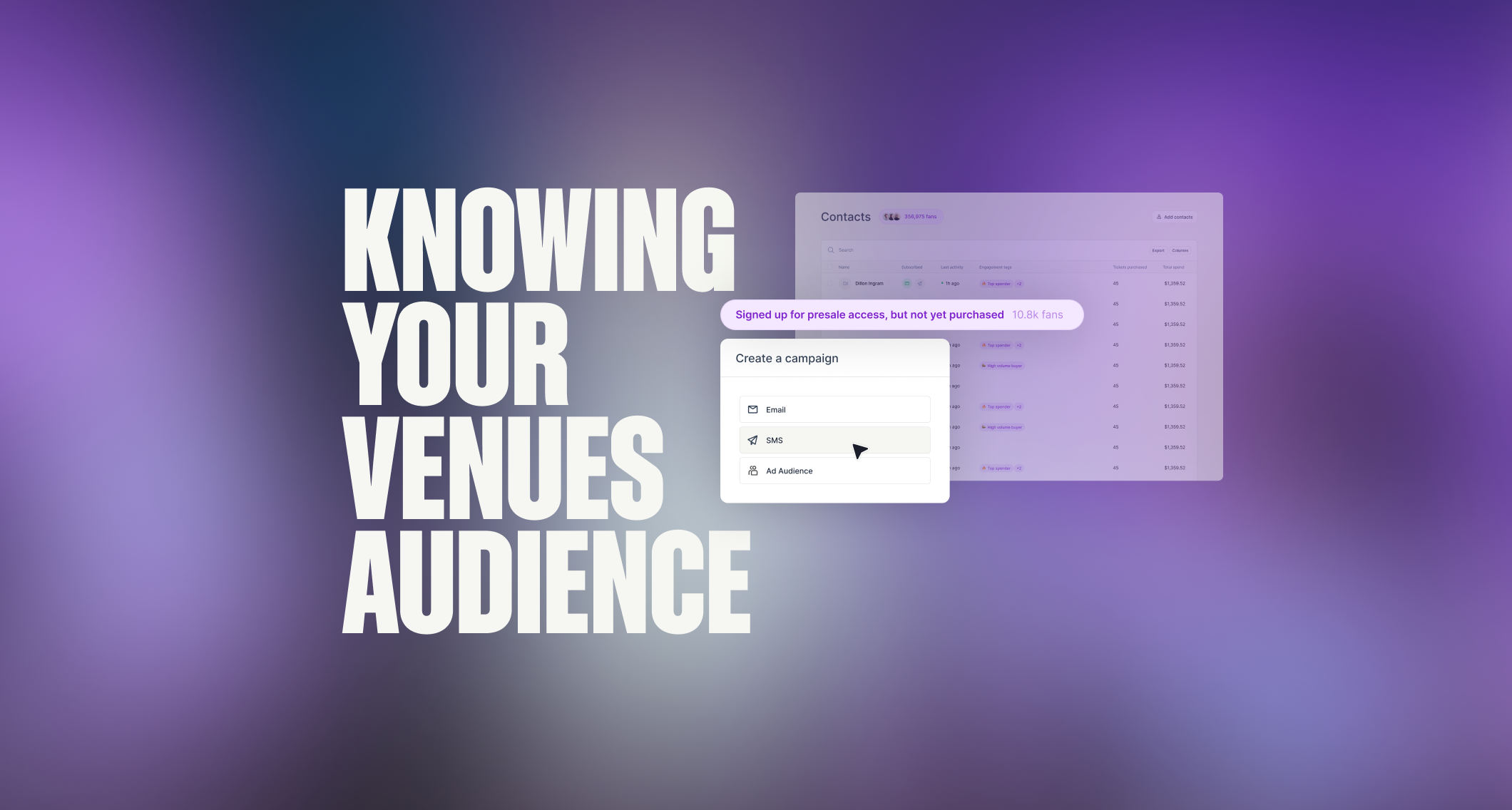
Audience Republic's platform for venues brings ticket buyers, email subscribers and SMS subscribers into one database, where marketers can build segments based on information including past attendance, genre preferences and purchase history.
Instead of simply knowing who is on your list, you can begin understanding who is in your audience.
A common pattern in event marketing looks something like this:
New show announced → select the database → send the announcement → repeat.
But your audience isn't one homogeneous group. The person attending their fifth show this year has a different relationship with your venue from someone who bought one ticket two years ago. A regular comedy buyer doesn't necessarily need every electronic music announcement. And someone who has already bought a ticket doesn't need another five reminders telling them to buy one.
Audience segmentation allows your marketing to reflect those differences.
Here are five audiences almost every venue should consider building.
1. Frequent attendees
These are the people who keep coming back. Someone who has attended three, five or ten events at your venue already has an established relationship with you.
Instead of repeatedly marketing to them like a new prospect, consider what might strengthen that relationship: early access, relevant recommendations, loyalty campaigns or exclusive announcements.
2. Genre and event-specific audiences
Past attendance can give you a strong signal about future interest. If you're announcing a new indie artist, previous indie and alternative buyers are probably a more relevant starting audience than everyone who has ever bought a ticket from your venue.
The same principle can apply across comedy, electronic music, theatre, family entertainment, sport or any other programming category.
3. Engaged non-buyers
Some of your most interesting audience members might be people who haven't purchased yet.
Perhaps someone:
That's a fundamentally different audience from someone who hasn't interacted with that event at all.
4. Lapsed attendees
What about the people who used to attend regularly but haven't purchased recently?
Rather than treating them as another cold contact, a venue can recognise that there is already a relationship there. A relevant upcoming event could be an opportunity to bring them back.
5. First-time ticket buyers
A first purchase shouldn't be the end of the relationship. It should be the beginning.
After someone attends their first show, you have an opportunity to learn more about their interests and introduce them to other relevant events. The aim is not simply to sell the first ticket. It's to build the second, third and fourth visit.
Segmentation becomes significantly more useful when it can respond to what your audience is actually doing.
Imagine someone clicks an email promoting an upcoming show but doesn't purchase.
That person could become part of an engaged non-buyer audience.
Then they purchase a ticket later that afternoon.
Ideally, they should automatically leave that sales audience.
They shouldn't continue receiving messages telling them to buy something they already own.
That's the difference between working from static lists and working from dynamic audiences.
Audience Republic combines ticket purchase history, campaign engagement, presale registrations and other audience information into fan profiles. Audiences can then update based on behaviour rather than relying on marketers to continuously export and rebuild lists manually.
It means your marketing reflects what your fans are doing now, rather than what was true when somebody exported a CSV three days ago.
There's another important part of the picture.
Not everyone interested in an event is ready to buy straight away.
All of those interactions provide an opportunity to learn more about potential ticket buyers before a transaction takes place.
Audience Republic's Data Capture tools support presales, waitlists, competitions and signup forms, with information feeding into fan profiles. Venues can collect information including location, phone number, date of birth, favourite artists and answers to custom questions.
That gives you another layer of audience understanding: interest before purchase.
Someone who has registered for a presale, clicked an announcement and returned to an event page several times is telling you something through their behaviour, even if they haven't bought yet.
Audience building shouldn't suddenly begin when tickets need to be sold.
Over time, these interactions should make your audience understanding richer.
So when your next show is announced, the first question doesn't have to be: "How do we find people to sell this to?"
Instead, you can ask:
That's a very different place to start.
Let's say your venue is announcing an electronic artist.
Instead of immediately promoting it to everyone, you could build audiences around:
Previous buyers: People who have attended similar electronic events.
Frequent attendees: People who regularly purchase tickets at your venue.
High-intent fans: People who joined the presale or waitlist.
Engaged non-buyers: People who clicked the announcement but haven't purchased.
Existing buyers: People who have already bought and should potentially be excluded from acquisition messaging.
Each group is at a different stage. And each can be communicated with differently.
The same segmentation can extend beyond owned channels. Audience Republic allows CRM audiences to be synced to Meta, Google and TikTok for paid advertising, alongside email and SMS campaigns.
Suddenly, marketing isn't simply about "promoting the event."
It's about deciding which audience needs which message, through which channel, at which moment.
The value of better audience understanding isn't simply having nicer CRM data. It's being able to use that understanding to sell tickets more effectively.
One Audience Republic festival case study provides a useful example. Ticketing data was flowing back into Audience Republic daily, allowing people who had already purchased to be excluded while campaigns continued targeting fans who still needed to buy.
Across 12 email and SMS campaigns, 30% of the festival's total ticket sales were attributed to those campaigns. The case study calculated a roughly 67x return against the platform's annual subscription cost. The takeaway isn't simply that venues should send more emails or SMS campaigns.
It's that better-connected audience data makes those channels smarter.
You know who's already bought. Who hasn't and what people have previously shown an interest in.
And you can understand which campaigns ultimately contributed to ticket sales.
For most venues, the biggest opportunity isn't simply building a bigger database. It's understanding the audience that's already there.
The opportunity is to connect those signals so that instead of saying: "5,000 people bought tickets."
You can start understanding who those 5,000 people are, what brought them through the door and what might bring them back.
Because a ticket buyer shouldn't disappear into a database once the transaction is complete. Every ticket sold is an opportunity to build a better understanding of your audience. And the better you know that audience, the less your next on-sale has to feel like you're starting from zero.
Get to know the audience behind your ticket sales
Audience Republic brings your venue's ticket buyers, email subscribers and SMS audiences together, helping you create segments using real purchase, attendance and engagement data and activate those audiences across your marketing.
Explore Audience Republic for venues